
Heat pumps are becoming an increasingly common choice for homeowners looking to reduce energy bills and move towards lower-carbon heating. A frequent question we hear is whether heat pumps can work effectively with traditional radiators, especially in existing homes. Understanding how the two systems interact can help homeowners decide if a heat pump is a practical and comfortable option for their property.
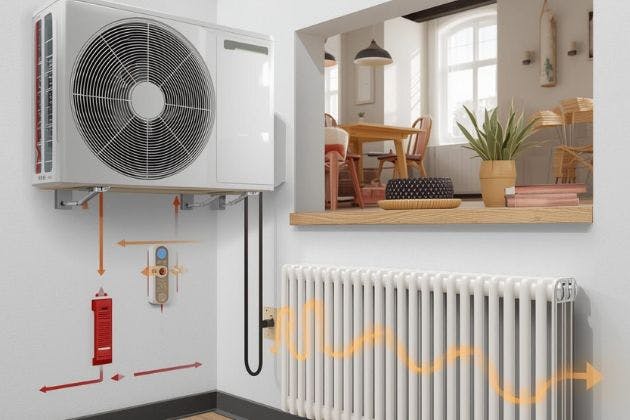
How heat pumps deliver heat through radiator systems
Lower temperatures and steady comfort
Traditional boilers often heat water to high temperatures, which allows smaller radiators to warm rooms quickly. Heat pumps, on the other hand, typically operate at lower water temperatures, which means the heat is released more gradually. This does not make the home colder. Instead, rooms stay at a more even temperature with fewer peaks and drops.
For homeowners, this often feels different at first. Radiators may feel warm rather than hot to the touch, but they are working continuously to maintain comfort. Once the home is up to temperature, many people find this steady warmth more pleasant and predictable.
Radiator size and heat output
One of the most important factors in making radiators work well with a heat pump is their size. Because the water temperature is lower, radiators sometimes need a larger surface area to deliver enough heat into the room. In some homes, existing radiators are already suitable, particularly if they were oversized or replaced during past upgrades.
In other cases, certain radiators may need to be upgraded to larger models or double-panel designs. A professional heat loss calculation will identify which rooms may need adjustments. This ensures the system runs efficiently without forcing the heat pump to work harder than necessary.
Insulation plays a major role
Good insulation is essential when combining heat pumps with radiators. Well-insulated homes retain heat more effectively, which allows the lower temperature system to perform at its best. Loft insulation, cavity wall insulation, and high-quality windows all help reduce heat demand.
In homes with poor insulation, radiators may struggle to maintain comfort without system changes. Improving insulation often delivers immediate benefits, not just for heat pump performance but also for overall energy efficiency and reduced heating costs.
System design and controls
Heat pump systems rely heavily on good design and accurate controls. Weather compensation controls are commonly used to adjust water temperature based on outdoor conditions. This allows the radiators to deliver just the right amount of heat without wasting energy.
Correct balancing of the radiator system is also crucial. Each radiator must receive the appropriate flow of water so that all rooms heat evenly. When designed and commissioned properly, a heat pump and radiator system can run quietly, efficiently, and reliably for many years.
When radiators and heat pumps are a good match
Many existing homes across Norfolk and Norwich can successfully use heat pumps with radiators, especially when the system is designed specifically for the property. Homes with reasonable insulation levels and space for radiator upgrades tend to see the best results. Even older properties can often be adapted with the right planning and professional assessment.
Heat pumps are not a one-size-fits-all solution, but with careful design, they can integrate very well into traditional central heating systems. The result is a comfortable home with lower running costs and reduced environmental impact.
Looking for expert heat pump advice in Norfolk and Norwich?
Norfolk Renewable Heating provides professional guidance, system design, and installation for homeowners considering heat pumps with radiators across Norfolk and Norwich. Call us on 07824393403 or 07939979217, or fill out our contact form to discuss your home and schedule a detailed assessment.